
The Sixth Day
Inside the Rio Grande Valley’s temp-agency warehouse economy, where workers say they are treated as disposable labor.

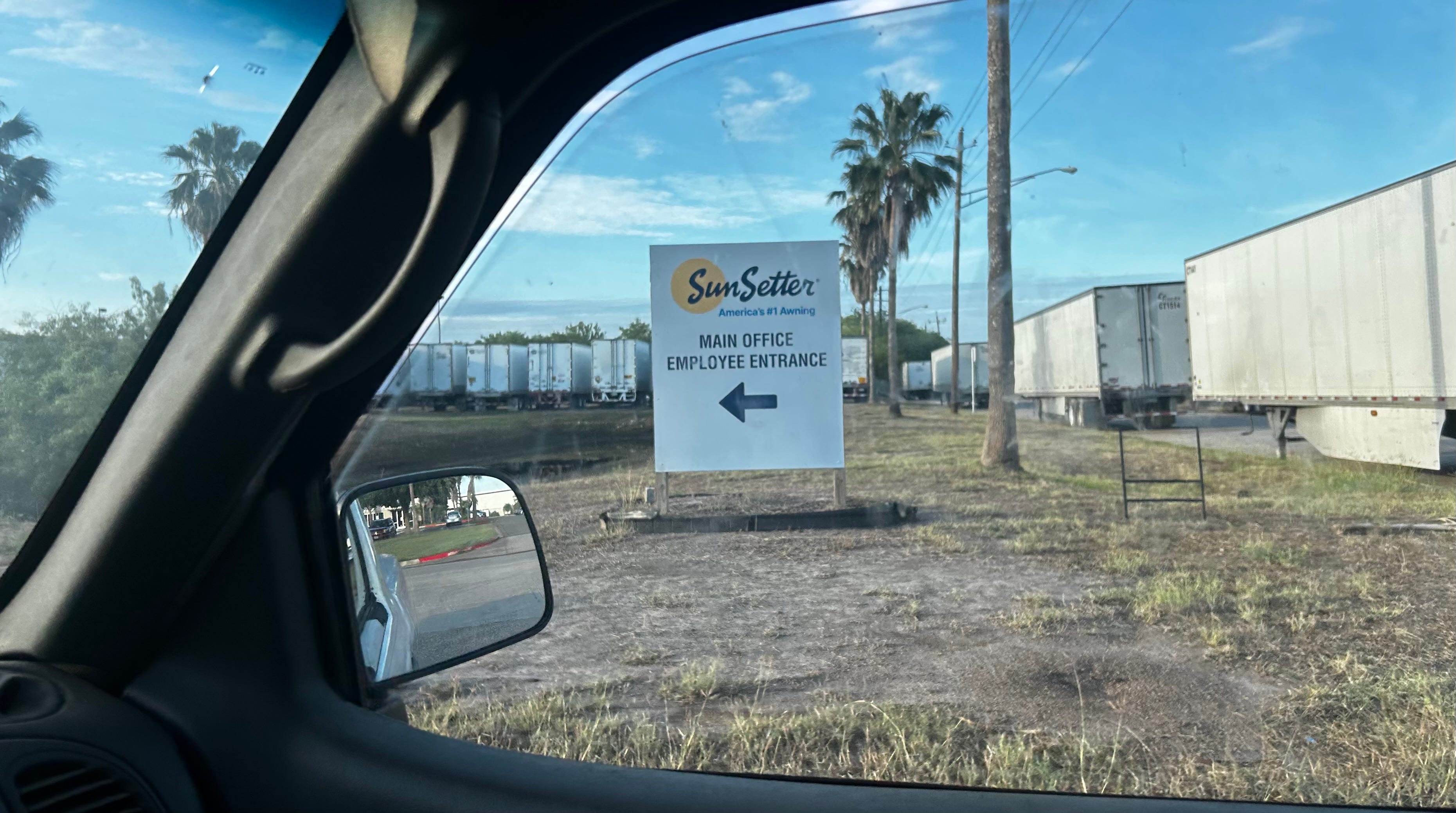
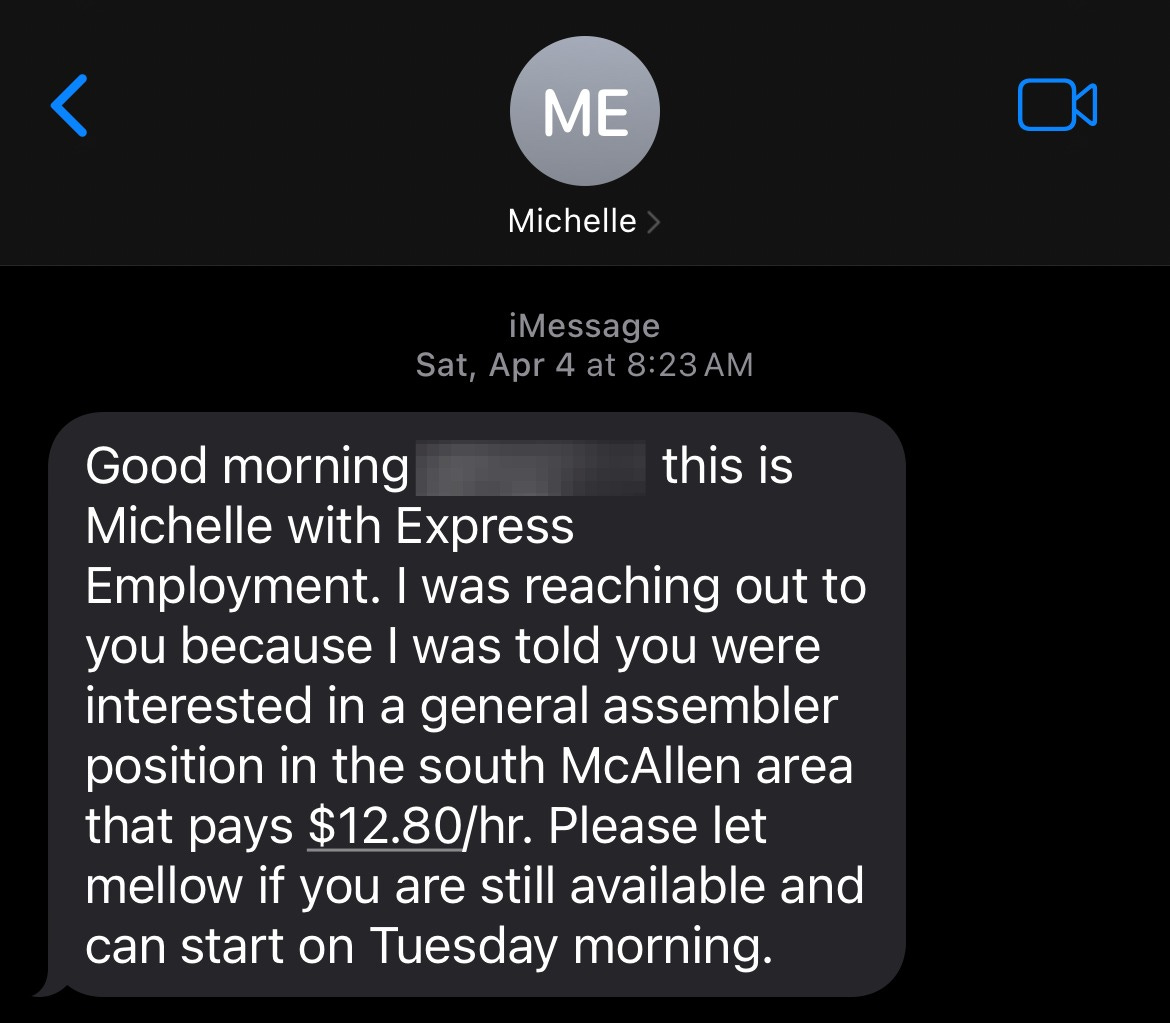
THE FLOURESCENT LIGHTS inside the McAllen production plant illuminated rows of machinery, as newly-hired workers sat through orientation videos warning them about workplace injuries, industrial accidents, and the dangers of the equipment they would soon be operating for 10 to 14 hours a day.
Several workers had only been at the facility a matter of days themselves.
One trainer according to a worker present during the orientation, repeatedly emphasized the importance of signing company safety documents acknowledging receipt of the training materials.
“Es para evidencia,” one trainer—Claudia Guajardo—said. “It’s for evidence.”
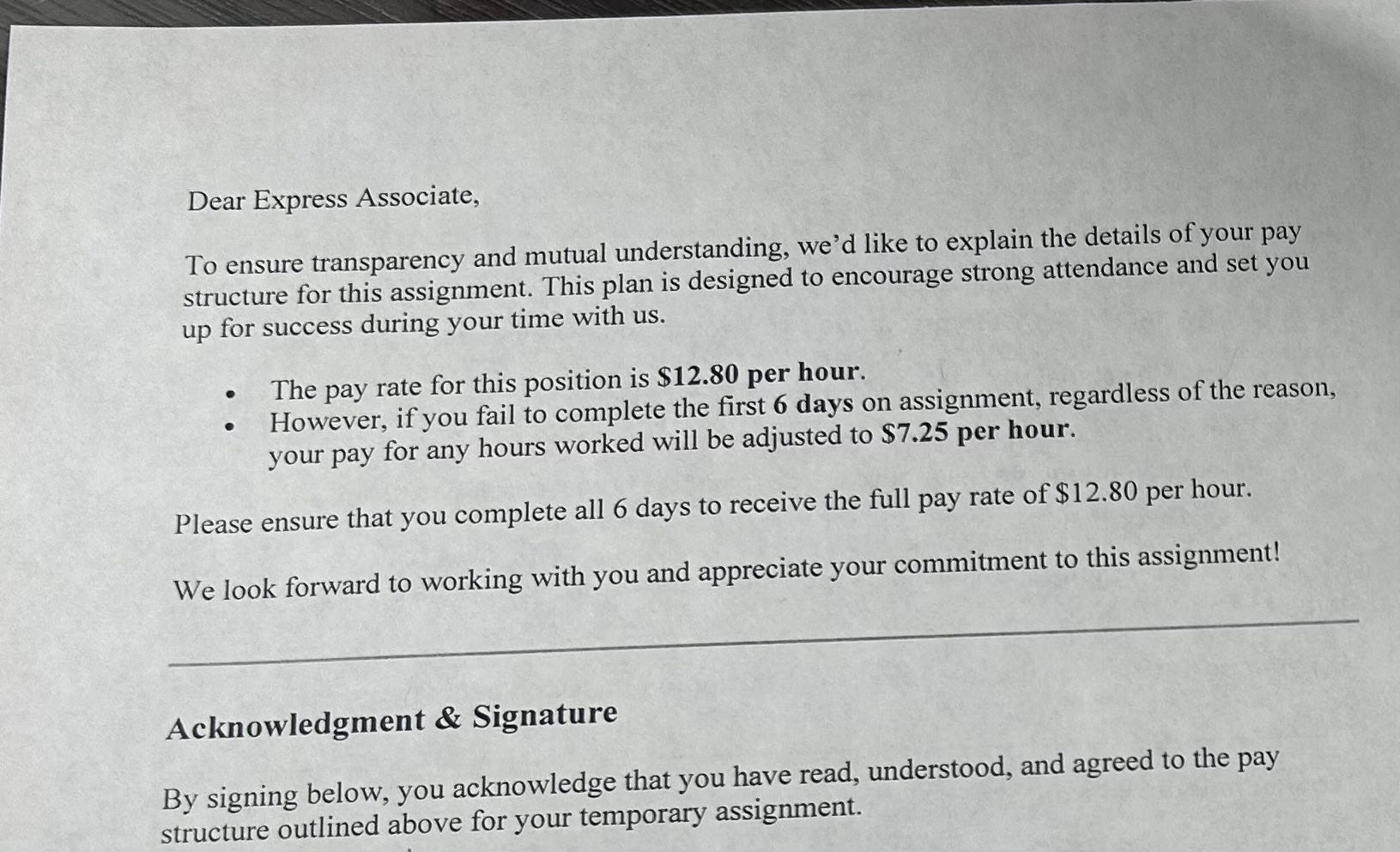
Workers at the SunSetter Awnings manufacturing facility in McAllen, hired through the temp agency Express Employment Professionals, say they were also required to sign another document before beginning work: a policy stating that employees who worked fewer than six days would not receive the advertised wage rate, but instead be paid the federal minimum wage of $7.25 per hour.
The advertised wage for the position was $12.80 per hour.

According to multiple workers familiar with the arrangement, the justification given for the policy was that some new hires would only show up for a few days before quitting. Workers interviewed for this article, however, described a system in which employees could be dismissed before the sixth day for vague or arbitrary reasons, allowing companies to reduce labor costs while cycling through a steady stream of temporary workers.
Workers employed at SunSetter through Express Pros also must pay for their own protective gear, like gloves and safety vest, deducted from their paychecks.
One worker referenced throughout portions of this article briefly worked at the facility through Express Employment Professionals in April 2026.
The worker said he had arrived shortly after 7 a.m. following only a few hours of sleep after preparing for the lengthy shift and commute. Roughly ninety minutes into the workday, he said, supervisors instructed him to wait in the breakroom under the pretense of receiving clock-in credentials.
Instead, an employment agency representative informed him that floor supervisors believed he was drunk and wanted him removed from the premises.
The worker said no sobriety test was administered and no evidence of impairment was presented.
The worker said the employment agency representative informed him that because he had not completed six days of employment, he would receive the reduced wage rate outlined in the policy workers were required to sign.
Just before publication of the original version of this article, however, Express Employment Professionals franchise owner Leo Vargas provided payroll records indicating the worker was ultimately paid the full advertised wage of $12.80/hour for all hours worked. Still, the existence of and request to sign such document was not denied nor justified.
The worker said the interaction became more alarming when he attempted to leave the workplace.
According to the worker, the employment representative warned that police could be called if he attempted to drive away.
“She said it was ‘for my safety,’” the worker recalled.
The worker ultimately left the facility without police intervention.

But workers interviewed by Uncancellable say the incident reflects far broader conditions inside the Rio Grande Valley’s rapidly expanding warehouse economy.
